Contextualizing Shah's concept of imperialism

By Philip Cardella 4 March 2026
On March 3, 2026, journalist Saeed Shah published a piece in The Guardian called "'Imperialist undertones': global south condemns US-Israeli war with Iran."
 Saeed Shah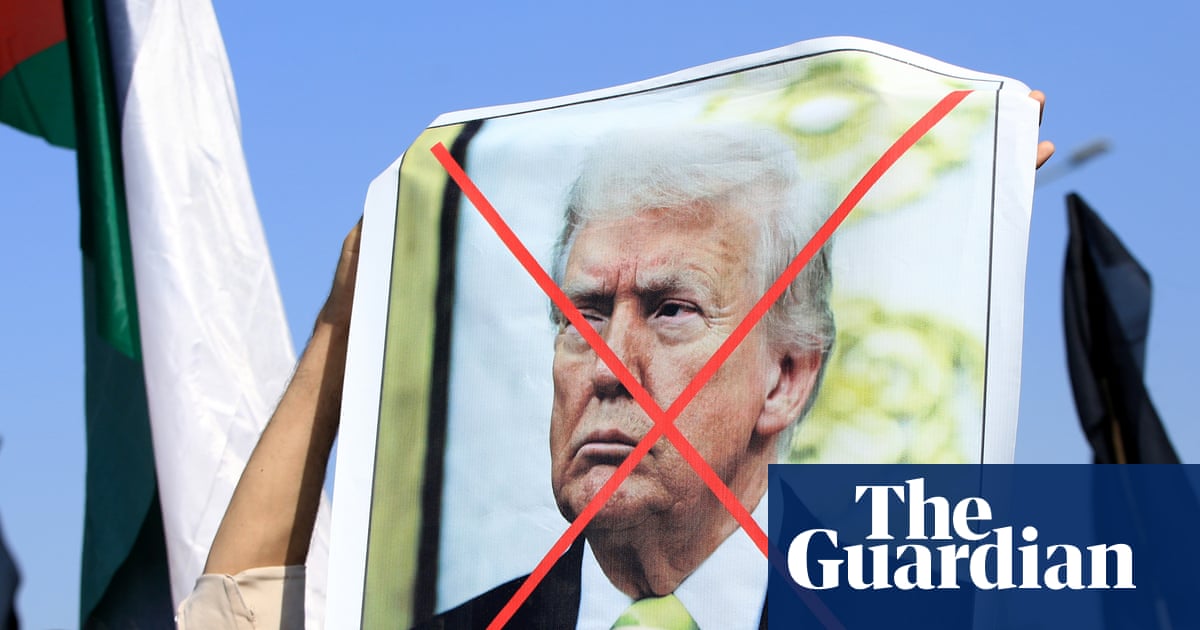
While contributing an important piece of information noting that countries typically considered part of the "Global South" including China, South Africa, Chile, Turkey and more condemned the US-Israeli attack on Iran, it also pushes a framework of understanding the world that is only implied.
The argument of the piece is that a) a lot of leaders and thought leaders inside and associated with the global south condemned the attacks on Iran as unjustified and illegal and b) that this is an example of the United States being imperialistic.
A) is straight forward reporting that is, so far as I know, accurate. However, b) takes quotes from two professors with connections to the UK, the US and South Africa and uses them to prove an argument, that the United States is being imperialistic. This isn't reporting the news in a strict sense.
There's nothing inherently wrong with that but it would be nice if it were contextualized as an argument–and that the lens that the argument is framed through were clear.
Let me pause just a moment and say, the theorists Shah quotes appear to be brilliant men and the theorist he doesn't directly quote but implies a reading of, Aimé Césaire, did enormously important work to help people living under the oppression of imperialism to better understand it. Perhaps Shah is accurately capturing the global south's perspective as seen through the lens of Aimé Césaire, for example, but I'm not convinced.
On to the particulars of Shah's piece.
For the first quote Shah says this:
Siphamandla Zondi, professor of politics at the University of Johannesburg, said that in the west, wars were viewed as having moral purpose, while in the global south, conflict was seen as evil and a failure to behave as adults. He said that the US and Israel had cajoled some countries through the Abraham Accords for diplomatic recognition of Israel, and used force against others.
“This is a war of domination and subordination, therefore it has imperialist undertones and motives,” said Zondi. “It makes the world unsafe for all of us.”
While I have no reason to disrespect Dr. Zondi, I will note that the quote from Zondi, “This is a war of domination and subordination, therefore it has imperialist undertones and motives. It makes the world unsafe for all of us,” reads like a response to a leading question such as, "Would you say this is an imperialist war?"
Imperialism is a crucial word here, which I'll get back to.
The next professor's thoughts are presented thusly:
Amitav Acharya, author of The Once and Future Global Order, said that in the past, the US had sought influence and legitimacy. Now, the US acted solely through coercion, even as Chinese soft power was gaining, with Beijing offering investment to developing countries. He said that Russia, too, would benefit, as Iran and other Trump foreign policy shocks took the focus away from Ukraine.
“Many countries in the global south are going to look for a coalition of powers that will stand up to the United States, as the United States is seen as so aggressive, so imperial,” said Acharya.
While Shah doesn't state it, I'll say that Dr. Acharya is more than just a guy that published a book–he's a distinguished professor at American University in The United States and a bad ass scholar.
American University does have campuses all over the world, but Dr. Acharya appears to be based out of the United States, something Shah doesn't mention while he emphasized that Zondi was in South Africa. In and of itself, this isn't important–perhaps it is a stylistic thing or perhaps he thinks people will recognize Acharya's book. Yet, it is odd given there's a clear ideological framework that Shah is presenting without stating it.
Still, Zondi and Acharya have forgotten more about political science than I'll ever know. These are experts being asked about the field they are experts in.
That said, looking at the actual quote from Acharya, however, it also reads like he's answering a leading question, likely, "Is this war imperialistic?" or something like that.
It's a fair question.
Here's the issue, Zondi defines imperialism as "a war of domination and subordination," and concludes, "therefore it has imperialist undertones and motives."
This is a very specific definition of imperialism that is not widely accepted–at least in the way presented in the piece. The fact that it is a particular lens and a controversial one at that is important context Shah doesn't write about.
Britannica, which is by no means a go-to definitive source of political science thought and argument, provides a simple place for us to at least get an overview of the arguments around the potential definitions of imperialism.
imperialism, state policy, practice, or advocacy of extending power and dominion, especially by direct territorial acquisition or by gaining political and economic control of other areas. Because it always involves the use of power, whether military or economic or some subtler form, imperialism has often been considered morally reprehensible, and the term is frequently employed in international propaganda to denounce and discredit an opponent’s foreign policy.
While this does comport to some of what the piece is suggesting through Zondi and Acharya, it should be noted that the British encyclopedia says without feeling the need to show receipts that "imperialism has often been considered morally reprehensible," which is at odds with the piece's claim through a paraphrase of Zondi, "that in the west, wars were viewed as having moral purpose, while in the global south, conflict was seen as evil and a failure to behave as adults."
This quote is from Shah (we don't know exactly what Zondi said), to be clear.
One scholar looking at politics over space (political geography) told me that they prefer an even simpler definition of imperialism: Imperialism - ruling over territory from a distance.
Still, Britannica breaks modern imperialism into four theories or arguments for its definition, and one of them seems to clearly align with Shah's thinking and at least how he's representing Zondi and Acharya. From Britannica:
- The first group contains economic arguments and often turn around the question of whether or not imperialism pays. Those who argue that it does point to the human and material resources and the outlets for goods, investment capital, and surplus population provided by an empire.
- Marxist theoreticians interpret imperialism as a late stage of capitalism wherein the national capitalist economy has become monopolistic and is forced to conquer outlets for its overproduction and surplus capital in competition with other capitalist states. This was the view held, for instance, by Vladimir Lenin and N.I. Bukharin, for whom capitalism and imperialism were identical. The weakness in their view is that historical evidence does not support it and that it fails to explain precapitalist imperialism and communist imperialism.
- A second group of arguments relates imperialism to the nature of human beings and human groups, such as the state...Those endowed with superior qualities are destined to rule all others.
- The third group of arguments has to do with strategy and security. Nations are urged, proponents of this viewpoint say, to obtain bases, strategic materials, buffer states, “natural” frontiers, and control of communication lines for reasons of security or to prevent other states from obtaining them.
- The fourth group of arguments is based on moral grounds, sometimes with strong missionary implications. Imperialism is excused as the means of liberating peoples from tyrannical rule or of bringing them the blessings of a superior way of life.
Highly influential, particularly in Africa, Afro-Martiniquan French poet, author and politician Aimé Césaire, connected imperialism, capitalism and colonization in his well regarded work Discourse on Colonialism.
In Discourse Césaire argues in the first section of the essay that the West sees its cause as a moral imperative. As evidence he cites a Christian scholar who said, "Humanity must not, cannot allow the incompetence, negligence, and laziness of the uncivilized peoples to leave idle indefinitely the wealth which God has confided to them, charging them to make it serve the good of all." Put that in context with Shah's paraphrase of Zaid, "[I]n the west, wars were viewed as having moral purpose."
It is probably worth noting that Césaire first published Discourse in 1950 from the Caribbean Island of French Martinique while the victors of World War II were actively discussing what to do with "Africa" and other, at that point, former colonies, like French Martinique. He was writing the piece while they were still counting the bodies from the French massacres of people in Algeria in 1945 and while France was actively trying to violently suppress Vietnam.
Césaire wrote Discourse while an active member of the French Communist Party.
It shouldn't come as a surprise then that lumping imperialism in with capitalism and colonialism is a Marxist idea that was pushed for decades through another highly influential and widely read book by an important thinker. The book, which translated into English has the title, Imperialism: The Highest Stage of Capitalism, was written by Vladimir Lenin, yes, that Lenin, and required reading in the Soviet Union until its collapse towards the end of the 20th century.
Yet, as Britannica rightly notes, this definition of imperialism, that its late stage capitalism and all about power, doesn't take into account pre-capitalist imperialism (capitalism is 500 years old–humans didn't have the technological wherewithal to create it earlier, and yes, capitalism is about much more than the exchange of currency for goods; imperialism is thousands of years old), nor does it account for communist expansion in his own Soviet Union and Communist China, among other places.
So, imperialism is, at best, a problematic word when used without evidence of an obvious desire to acquire land, resources or lasting power to control.
Specifically, Shah's piece is about Iran and Trump's attack on that sovereign nation. What is Trump's motive for bombing Iran? Trump has said it was to prevent Iran from attacking US soil, its been argued the US was forced into by Israel who was going to strike with or without the US, Trump has also said it was to eliminate Iran's already "obliterated" nuclear weapons program, Trump has also said it was about regime change. Trump has also said...he's given a lot of not particularly coherent things about it. Which is it?
If it is about imperialism as a synonym with capitalism it should be something clear. There should be something tangible–you know, stuff, capital. It's hard to have capitalism without the stuff, the capital, things you buy and possess, even if we say that the stuff can include controlling people. Is Trump trying to assert active and ongoing control over Iranians? Is he after oil (as he was in Venezuela)? Land?
There's no clear indication its any of those things and its should be noted that Iran was willing to give the US concessions it demanded.
 Presstv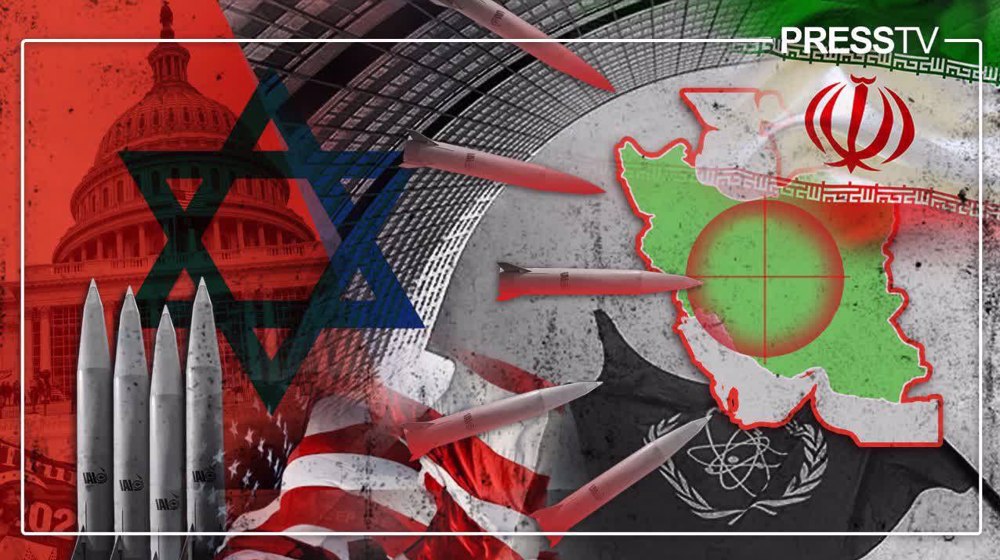
Here's why I think this is important. It's not because I disagree with Shah on the validity of the Marxist framework he's clearly employing here. I will say, I hesitate to use any one ideological framework to apply to everything–one of my biggest issues with Marxism and Marxists is that they seem to think that their ideology can solve everything, understand everything (I have the exact same issue with capitalists!).
That's not necessarily driving me feeling the need to write 3000 words on this.
It's that by saying this is imperialism it ascribes method to the madness that I'm unconvinced is there at all.

So what?
So, for people like Césaire, Zondi and Acharya who have spent their entire lives working on this subject, they aren't going to toss the words like "imperialism" and "colonizer" around without a ton of thought and personal experience backing it–and remember, in Césaire's case, he was writing in a post World War II world where it was unclear what was going to happen to the "colonies" of the Western powers.
However, for many people, particularly far left liberals, in what Shah calls the global north, they do toss words like imperialism, colonizer and other words like capitalism and fascism around as insults. They hurl them as pejoratives that are little more than supposedly high brow ways of calling someone an "asshole."
While Trump may well be an asshole, as a historian I'm telling you, you're not going to find any American President that wasn't rightly called an asshole. The ones my liberal friends are thinking are exceptions might be the biggest assholes of them all. Private Citizen ex-President Jimmy Carter may have been a saint, but President Carter was an asshole and after he left the White House in 1981 he would have politely berated you for suggesting otherwise (and this coming from a person who thinks he was America's most underrated Presidents).
What if, like Christopher Nolan and Heath Ledger's Joker, Trump and his allies just want to watch the world burn? Or, what if, as many have said, it's a distraction from the Epstein Files, or the economy, or ICE or a hundred other things?
If we just say, "yep, it's imperialism," (or, "he's an asshole") we are in danger of thinking it is something we can readily understand when it is possible, like the Nolan/Ledger Joker, there isn't a way to understand what's going on other than to recognize that some people just want to watch the world burn. At least, there's not an easy way to understand it.
There is an ideology, for whatever it is worth, that falls into the category of "just want to watch the world burn." That ideology is fascism.
Interestingly, while Mussolini coined the term fascism, taken from the Italian word for bundle of sticks, it still isn't fully understood and is hotly debated among scholars of fascism. Like the ongoing debates about what fascism was in the "interwar Europe" in the middle of the Twentieth Century, whatever Trump et al are, whatever they're doing in Iran, might not be fully understood for generations, if at all.
That's not to say we shouldn't try, however. We just need to be careful before we take these extremely dangerous times, this extraordinarily dangerous moment, and think we can easily get our minds around it.
What separates fascism from other forms of authoritarian or even totalitarianism is that blood lust. A totalitarian may be fine with bloodshed and may even welcome it but a fascist needs it. It's a drug to them. They'll unleash violence on their own selfs, their own bodies, if they run out of people to torment. Nothing is more dangerous than fascism.
This is actually a point Césaire makes in Discourse, by the way, as he discusses the boomerang effect–that colonialism and imperialism tend to boomerang onto the dominant country's populace in the form of fascism. This is a point I agree with, to be clear.
And that's another concern I have with fixation on the Marxist theory that capitalism and imperialism are all essentially the same thing–particularly in the hands of the far left in the West, it tends to reduce real world horrors to an ideological argument. This runs the very real risk of losing sight of the 150 people, mostly children that were killed on the opening day of the attacks in Iran on a school.
While it is possible that it was an extremely sophisticated ordinance going off course, it is perhaps equally or more likely that, if what we're dealing with is not imperialism so much as it is outright fascism, that the school was intentionally targeted because someone thought it was funny, or at least, effective.
Let that sink in.
The ideological fixation on imperialism (or fascism in the attackers for that matter) also runs the risk of downplaying what the Iranian regime is: a totalitarian institution that has escalated mass murder over the last twenty years in defense of its own highly oppressive theocratic regime.
 AMIR-HUSSEIN RADJY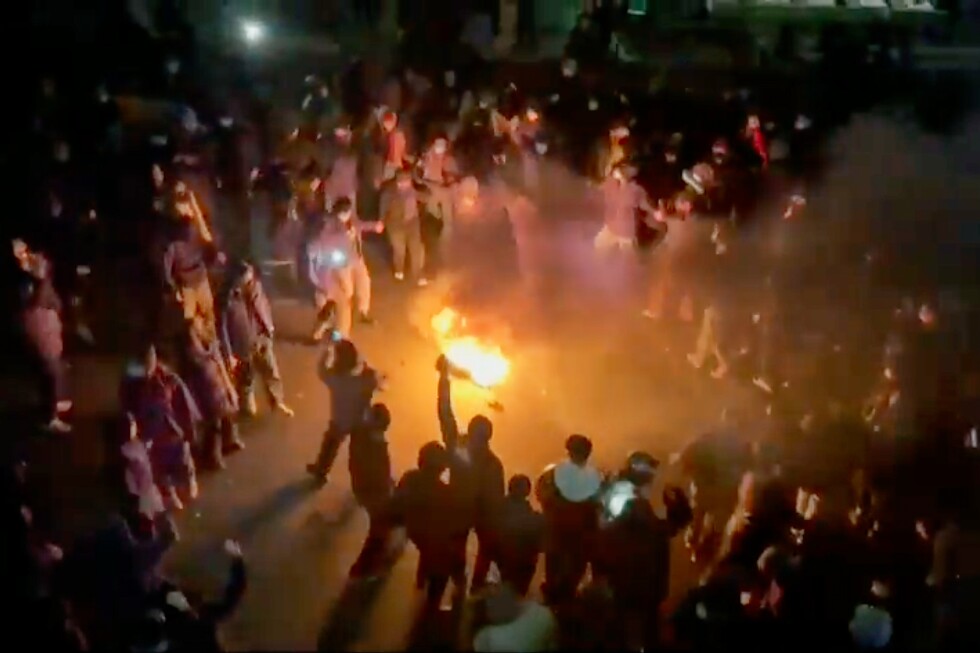
Just how awful the Iranian Regime is was the topic of NPR's On Point today–and it is awful.
Back to Césaire, like a good Communist in 1950, Césaire viewing a world where capitalists, fascists and totalitarians had recently engaged in the most devastating war in the history of the planet, was calling for a global revolution of the proletariat, so it makes sense he'd try to appeal to the people living in the global powers at the end of World War II. Communists were involved in that war too, of course, but the scope and scale of Stalin and Mao's purges either hadn't happened or weren't known then.
Shah, while reporting the news, is either intentionally or unintentionally promoting an implicitly Marxist ideological lens for viewing the conflict that is unlikely to find universal purchase in the "global south." That seems like important context for understanding what the article is trying to say and how it is saying it.
I hope what I've written makes it clear that while I think fascism is the ideology that better helps us understand the attack on Iran, as opposed to "imperialism," I don't think fascism is a complex enough framework for understanding what's going on here either.
I think a lot is going on and I think we need to discuss it accordingly rather than trying to force it into any box, especially one that is so ideological in nature.