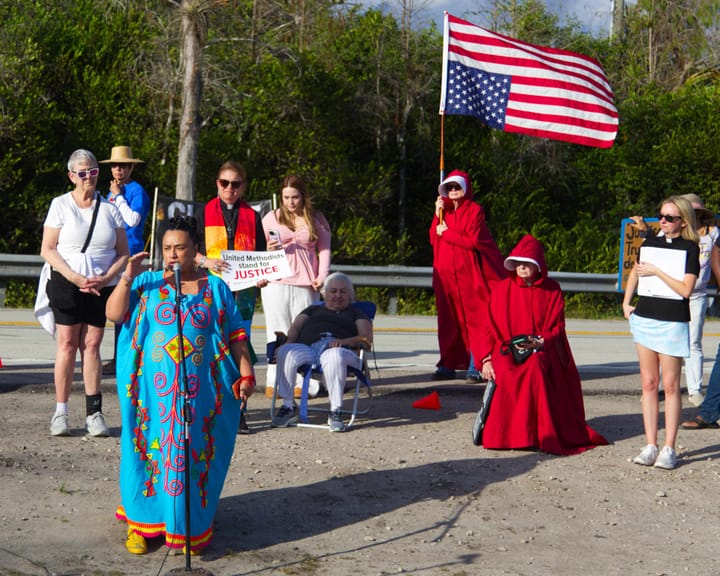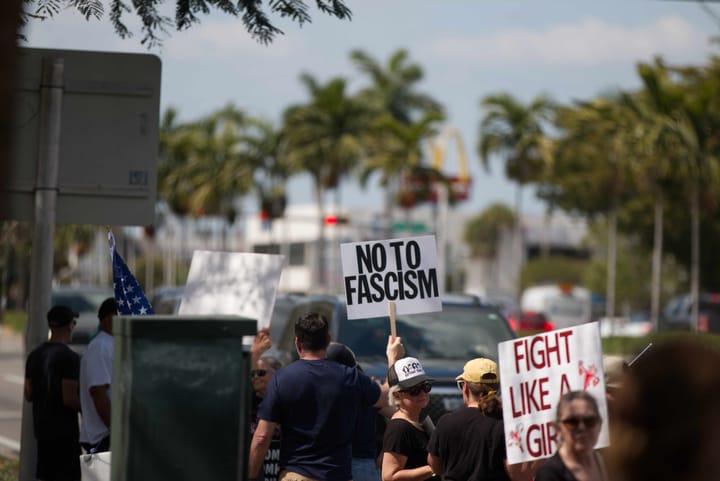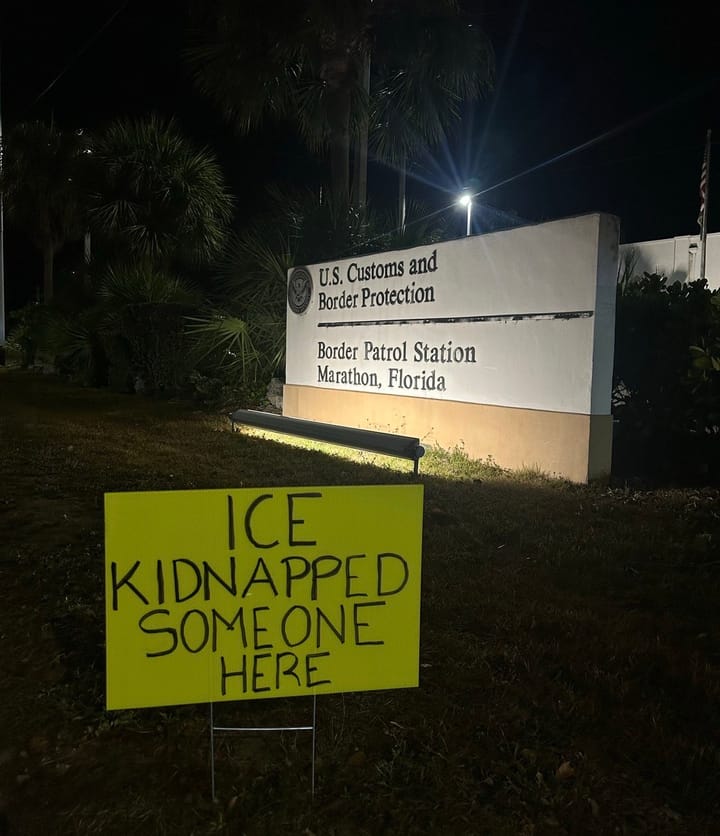
Special Coverage of the 24th Weekly Sunday Prayer Vigil at Alligator Alcatraz
By Philip Cardella 15 January 2026
US 41 Mile Marker 48
Say its Name
Say its name, so long as you remind people of why its name matters: Alligator Alcatraz. The name is a century old racist joke about violence against people of color. Remembering that matters when people talk about the conditions inside of the facility about 30 miles west of Miami.
 , For The Win
One family of a detainee in the Florida run facility in partnership with the Federal government (despite a cover-up of that relationship to skirt a lawsuit), told of how a man entered the facility two weeks prior and literally had diarrhea for two weeks and did not receive any medical attention. Several others in the block did as well.
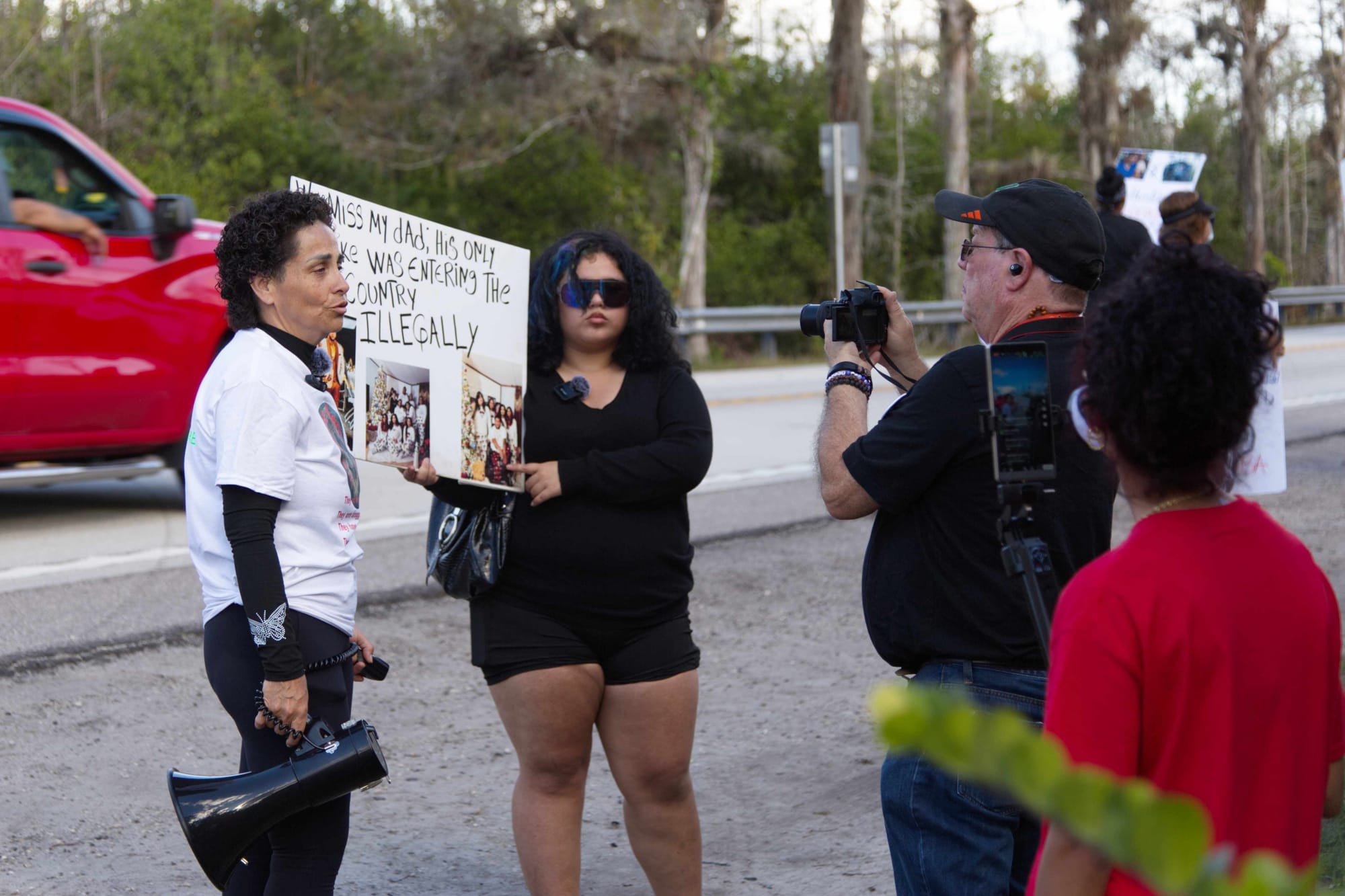
One cell block in the facility has, according to family members outside the facility, 100% of the detainees with COVID.
The press cannot be expected to attend every prayer vigil--they are stretched too thin already, starved by billionaire owners or hedge fund owners that serve at the whim of billionaire investors, and there are too many other stories at least equally worthy of coverage on the topic of immigration.
 WLRN News Staff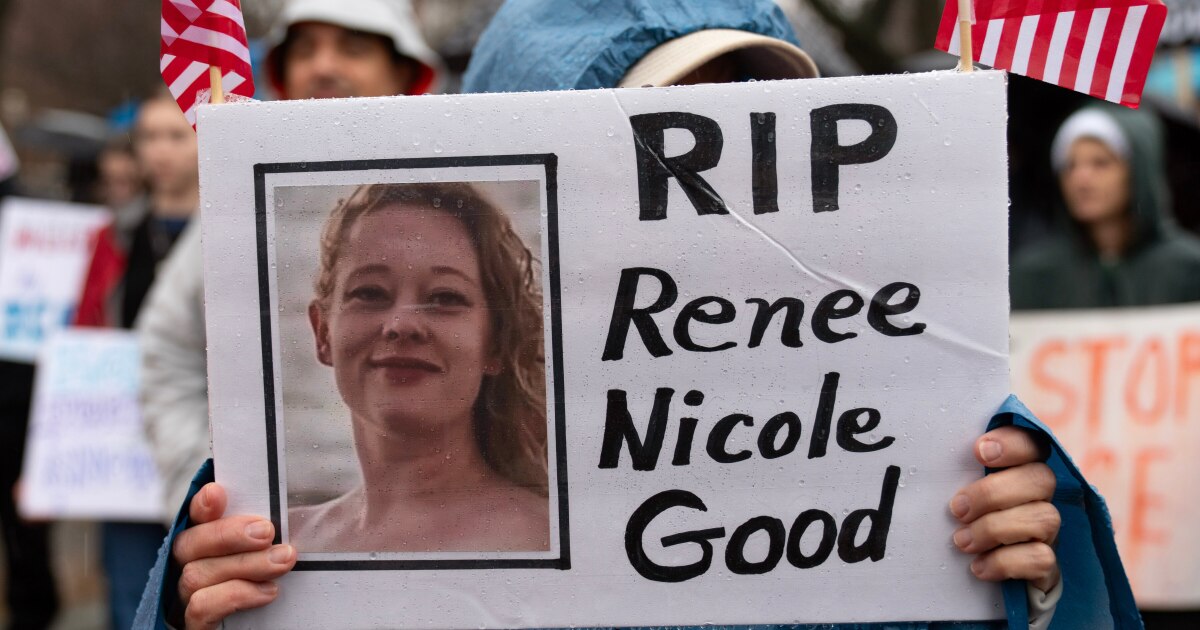
WLRN, South Florida's NPR station covered many protests this weekend.
What is more, if the press gets too close to a subject they can get nervous that they aren't being objective enough, or at least perceived as objective enough.
The problem is objectivity is a male bovine excrement concept that is impossible to achieve, but the post truth press landscape and the whims of billionaires with far right, even openly white supremacist agendas, force editorial decisions that create unnecessary and even unhelpful divisions.
 Jill Filipovic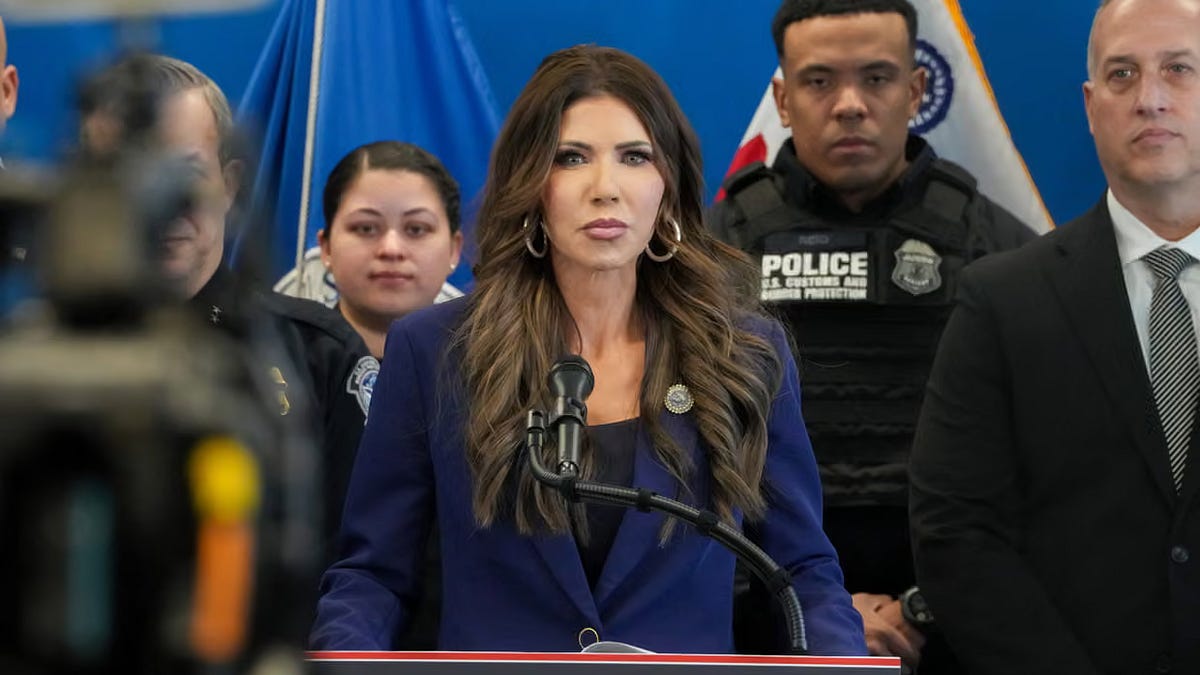
This article includes a section on Elon Musk who, while technically owning a social media platform, not a newsroom, does function as a gatekeeper for what stories go "viral" and what ones fizzle out. At least he tries to.
On the other hand, if the press covered all 24 prayer vigils at the Abomination on US 41 then it would look like the press is taking a position. That's potentially not good. The problem is, what's the legitimate argument for the Abomination? I'd argue there is none. So their pursuit of objectivity, an impossible goal that is akin to chasing rainbows, dragons and chimera, in the end reveals their subjectivity and limits their ability to tell the stories that need to be told.
Camp diseases like the ones that killed hundreds of thousands during the American Civil War are allegedly rampaging through Alligator Alcatraz
If the press had reporters at every prayer vigil across from Alligator Alcatraz they'd hear stories about how diarrhea and COVID is rampaging through the facility.
For context, while 600,000 soldiers died during the American Civil War, most of those died not from battle, but from camp diseases, like dysentery and the measles. The majority of time for any Civil War soldier was spent in a tent city camp and diseases ran wild through those tent cities. Literally, for every soldier who fell in battle two were killed by camp diseases.
"Not long after the Civil War opened in 1861, measles cut down the ranks of an Alabama infantry unit like a biblical plague or the medieval Black Death," Civil War historian and professor of history Glenn W. Lafantasie wrote in 2011.
 Glenn W. LaFantasie
With a disease that has been compared to measles (COVID–and with measles itself resurgent) allegedly rampaging through the tent city camp in the swamps of South Florida and the age old foe of diarrhea rushing through the detainees one might think it newsworthy.
Admittedly, science has improved dramatically since the 1860s–which makes the fact that these men are allegedly being denied medical treatment based on that science all the more newsworthy and galling.
We know that about 30 people died in ICE detention in 2025, which, as ICE points out, is less than 1% of the detainees. But how many unnecessary deaths are too many?
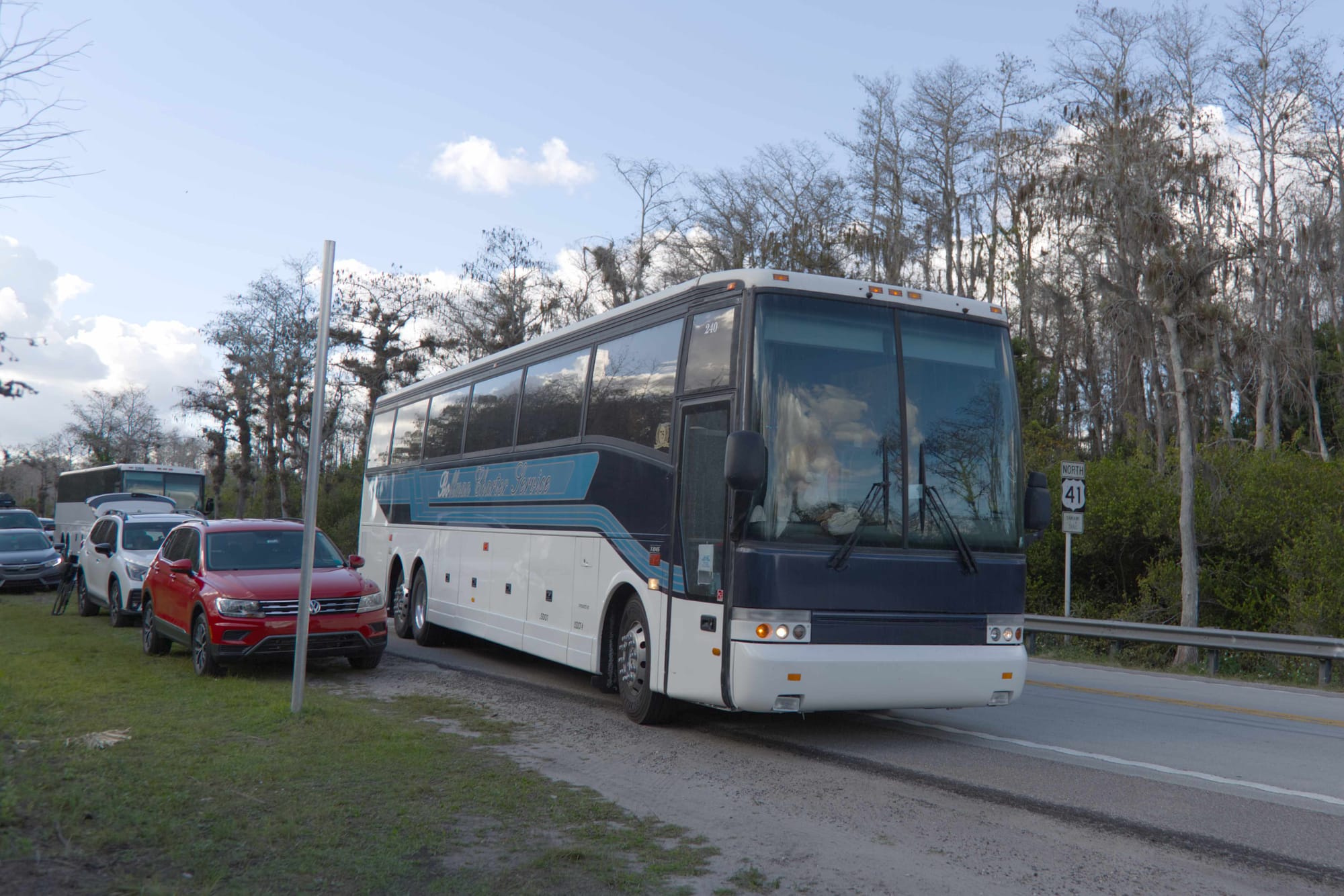
Attendance at the prayer vigils has been increasing over the last several weeks
Back to the 24th prayer vigil across from the South Florid Detention Center, commonly known by its racist nickname, Alligator Alcatraz.
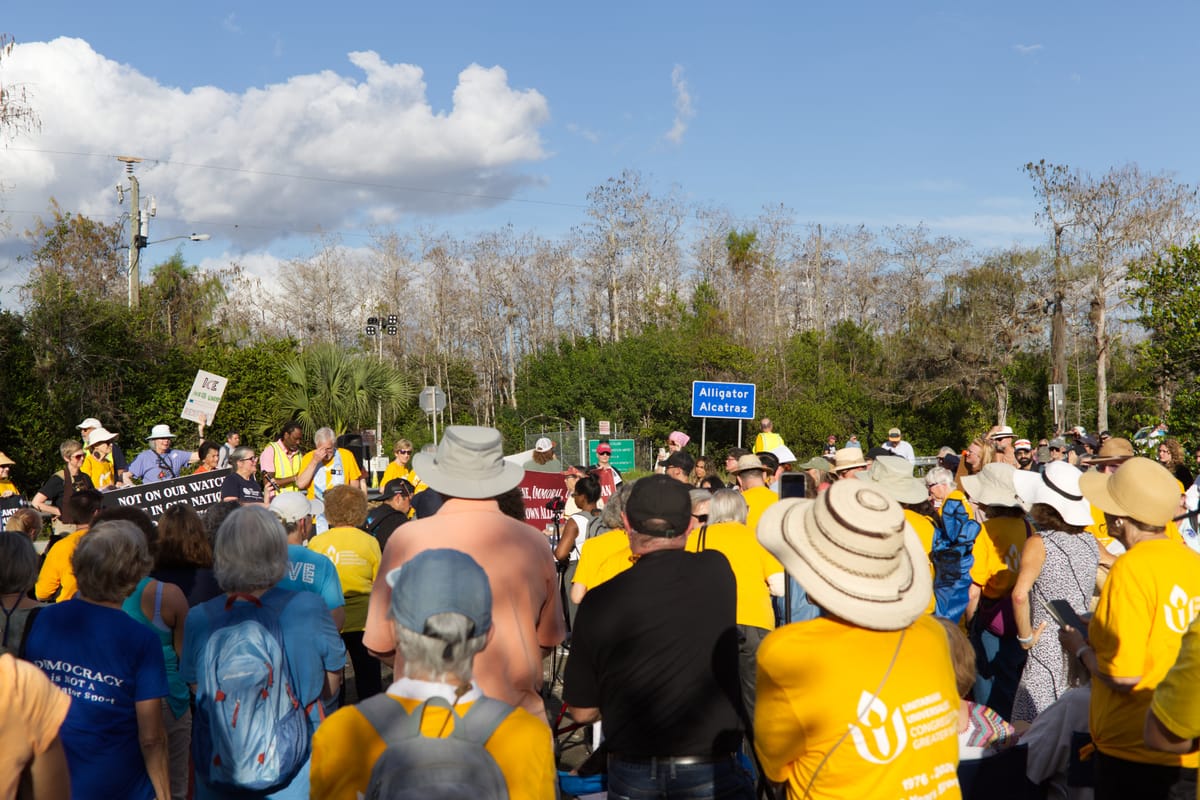
The Workers Circle, a group that has taken point in organizing the vigils across from the detention center and started many elsewhere as well, funded four buses for people to travel from Florida's east and west coasts. Three buses came from the Ft. Meyers and Naples area and one came from Biscayne Blvd in Miami, near the cruise ship port. These buses were full and that combined with dozens of cars that drove to the site amounted to somewhere between 200 and 250 people in attendance for the vigil on Sunday.
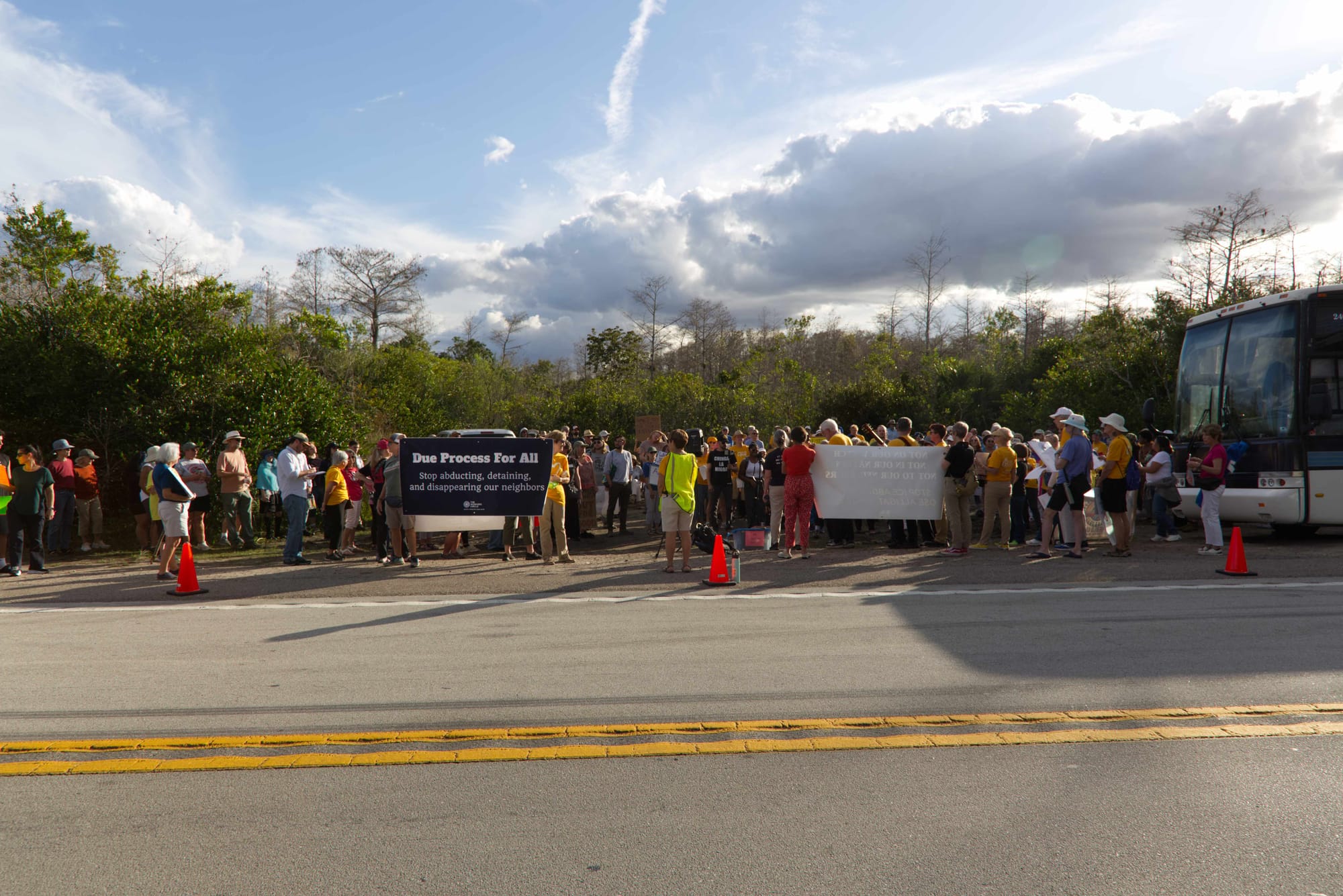
In my approximation, the average attendance for the 24 weekly vigils has been just over 100, so a turnout of twice that is noteworthy. That said, with perhaps 180 at the 28 December vigil and at least 120 at the 4 January 2026 vigil, attendance is trending up as the vigils, and the detention camp, near the 6 month mark.
The attendees and speakers ranged from young to old. One powerful speaker was a sixteen year old from Sarasota and another was a 97 year old who described himself as a "DACA baby."
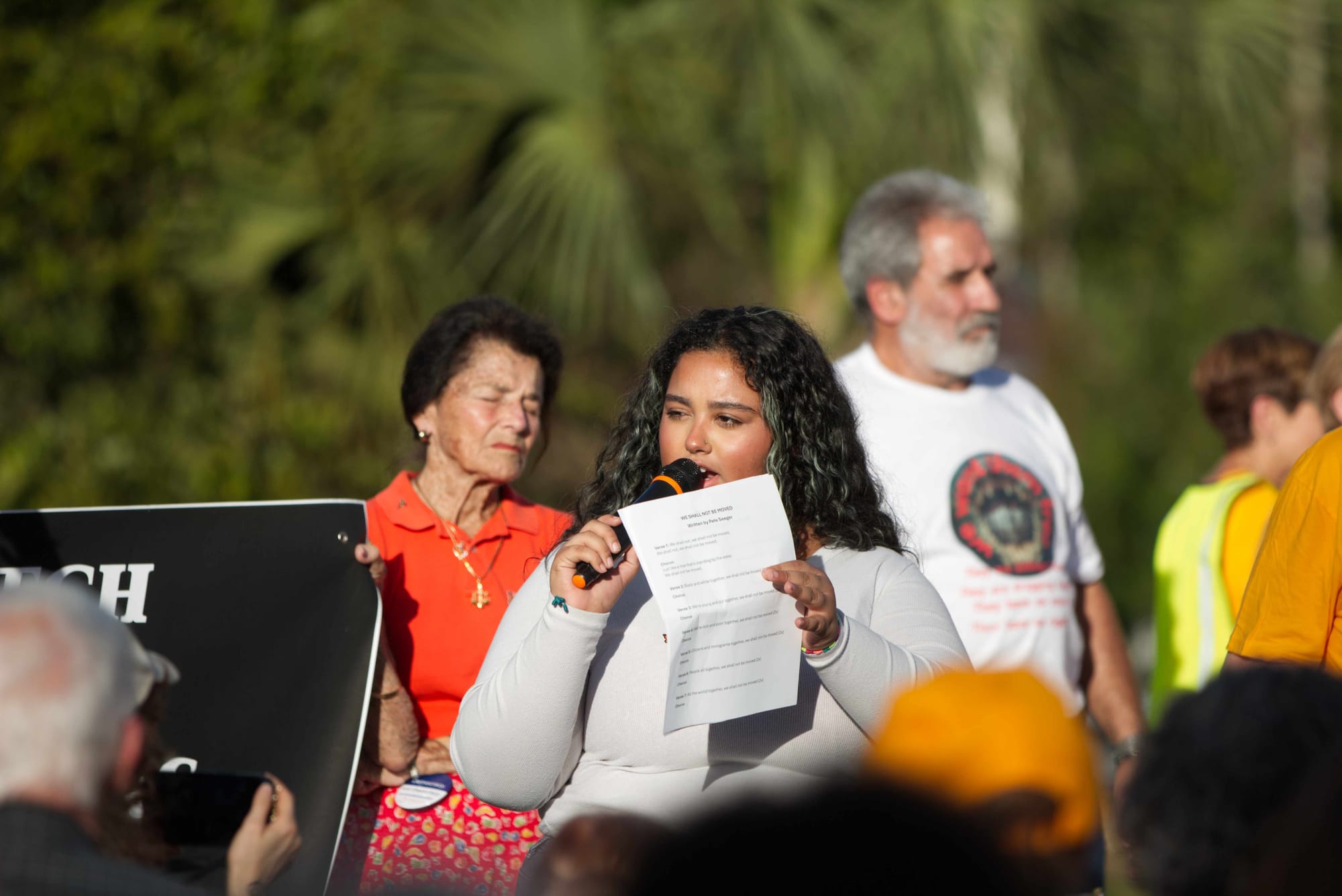
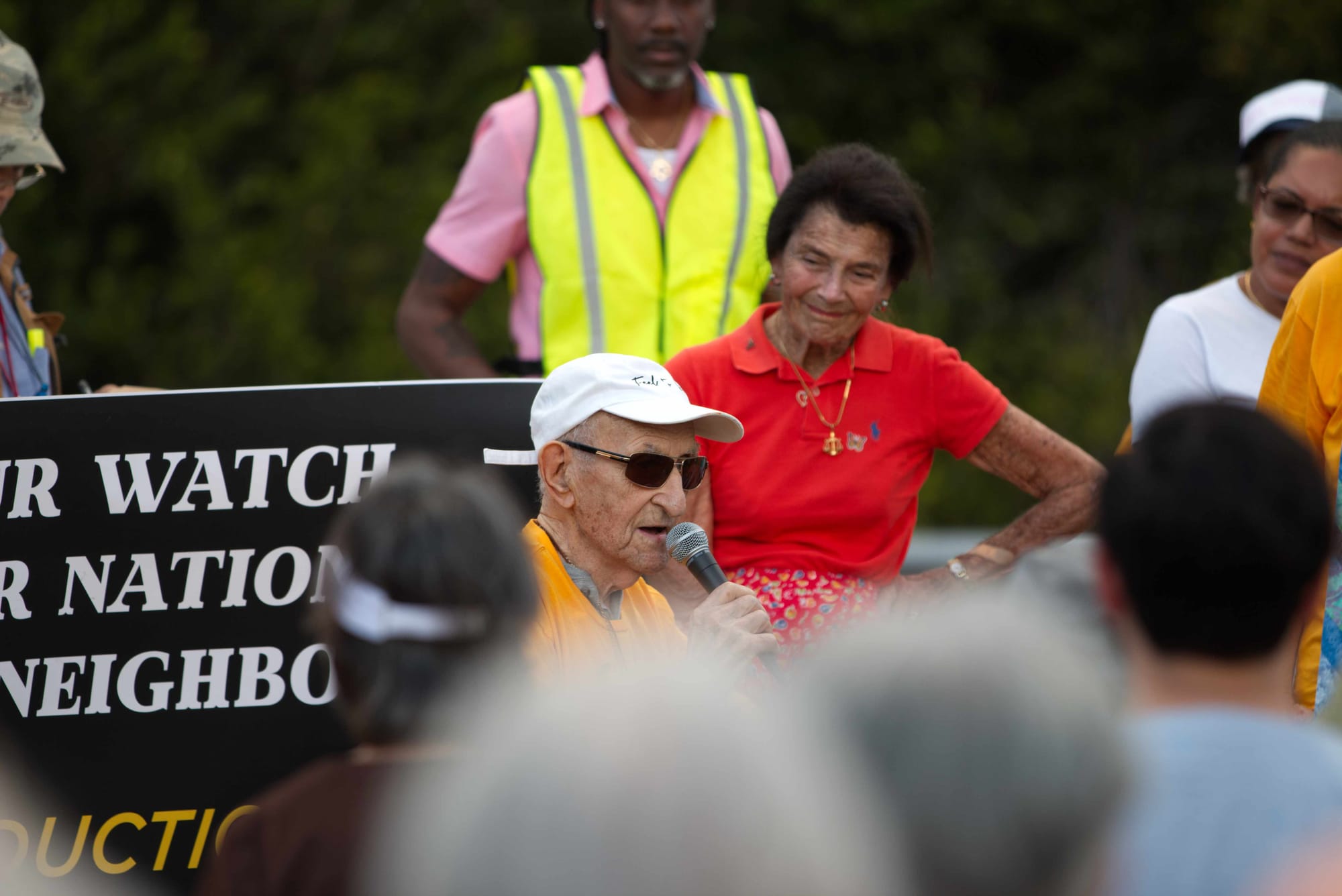
A sixteen year old activist from Sarasota shares that her upbringing taught her that “when something is wrong you do not look away, you do not stay silent because speaking up is uncomfortable, you do not excuse cruelty because it has been legalized or normalized…and what is happening here is not right,” and another speaker shares, “I’m 97 years old and I’m here to say I’m a DACA baby,” during the 24th weekly Sunday prayer vigil across from Alligator Alcatraz on January 11, 2026.
The most pressing issue of the 24th weekly Sunday prayer vigils
While the diseases running through the detention camp are extremely important and not getting the attention they deserve, arguably, the most important issue addressed during the 80 minute long vigil was what is about to happen to the Haitian community in the United States. A community that is disproportionately in South Florida and one that has Temporary Protected Status in the United States after the earthquake in 2010 rocked the island nation, causing an unstable government to functionally collapse.
 Tania Francois Tania Francois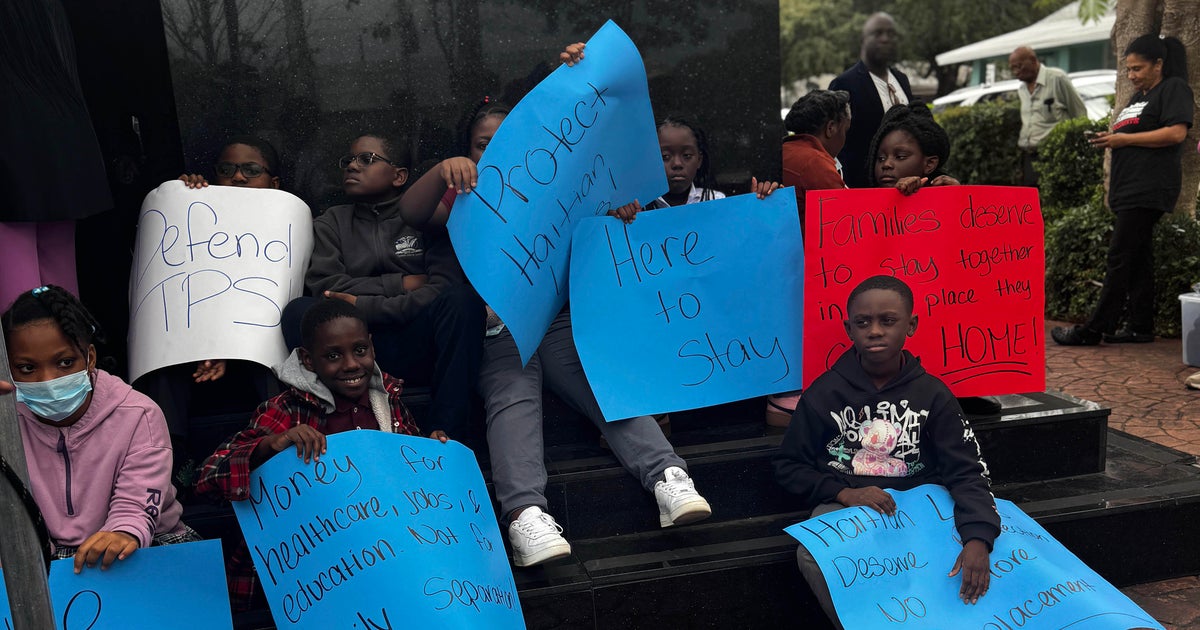
The United States does not want airplanes flying to Haiti because of incidents of planes being shot at while sitting on the tarmac at the airport. Gangs all but run the country (estimates say 90% of the capital, Port-au-Prince, is controlled by gangs) at this point and many Haitians living in the United States under TPS, if returned, would face either joining a gang or being executed.
Though the Trump Administration has made very clear that Haiti is unsafe, they are now ending TPS for over 500,000 Haitians living in the United States and forcing them back to Haiti.
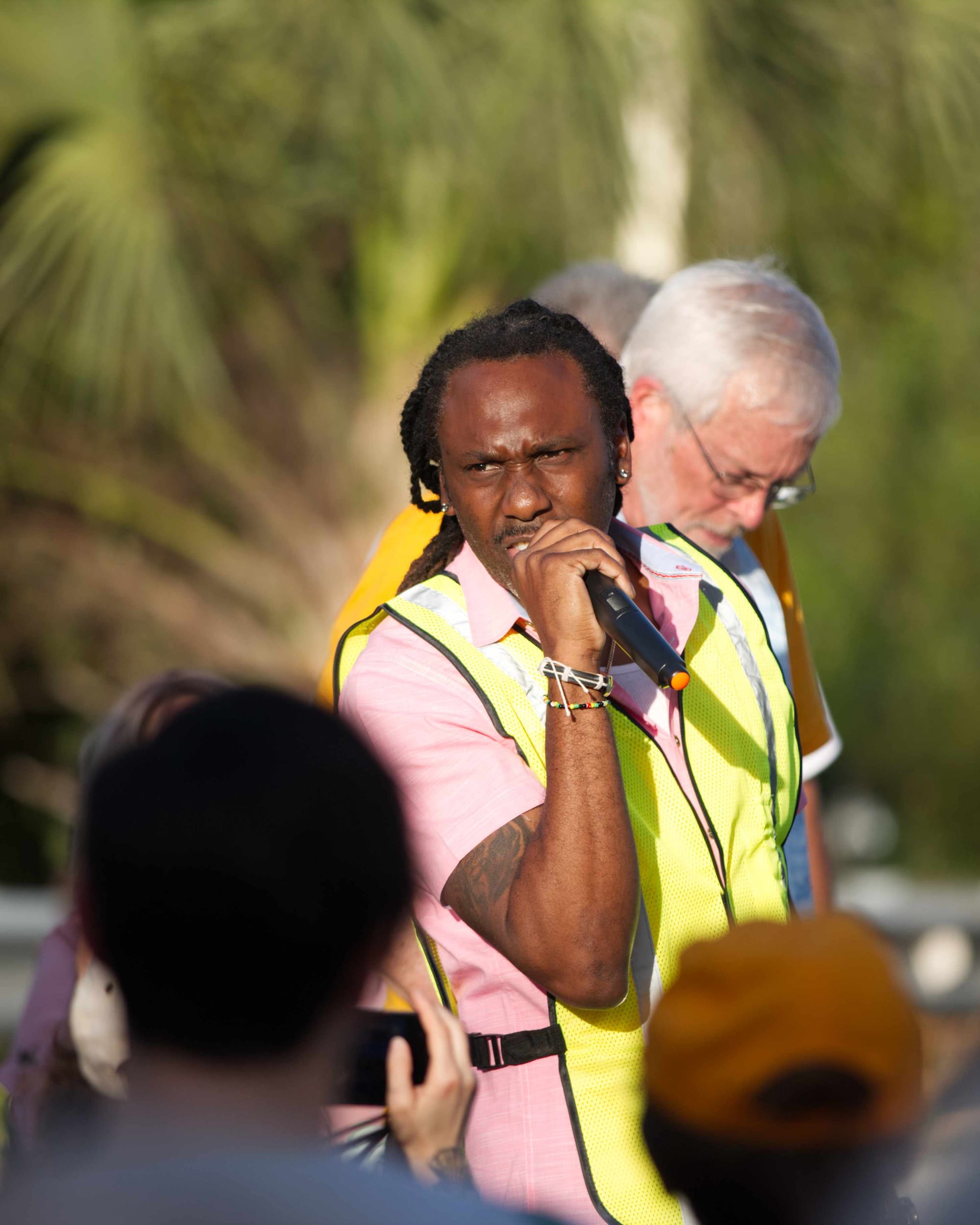
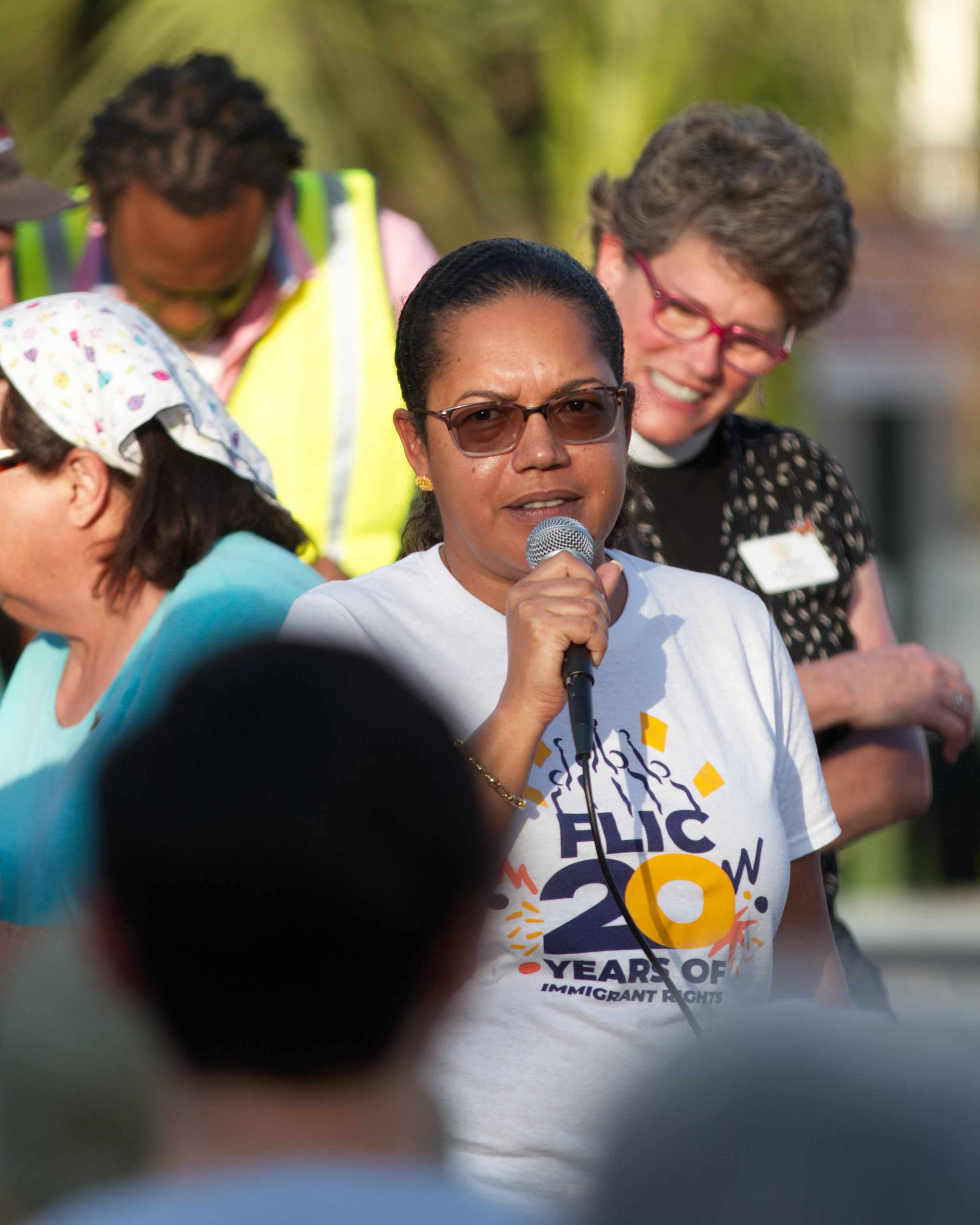
Harris Harrigan, a Miami based union leader and child of Haitian immigrants, reminds the congregation gathered across from the so-called Alligator Alcatraz of the ending of Temporary Protected Status for Haitian immigrants and tells them about the horrific conditions in Haiti today, while Tessa, a Haitian immigrant and organizer with Florida Immigration Coalition, tells the audience that she fled Haiti in the “span of two hours” to save her husband and children. “We migrate for survival,” during the 24th weekly Sunday prayer vigil on January 11, 2026
Article 33 of the United Nations Charter, signed by President Lyndon Johnson in 1967 and thus binding to the United States, says that "No contracting state shall expel or return (refouler) a refugee in any manner whatsoever to the frontiers of territories where his life or freedom would be threatened on account of his race, religion, nationality, membership of a particular social group or political opinion. The United States Congress further encoded it into US law through the Immigration and Nationality Act.
According to Monica Iyer, assistant professor at the Georgia State University College of Law:
The standards for non-refoulement from the Refugee Convention and the Convention against Torture have both been integrated into US refugee law. Section 208(a) of the Immigration and Nationality Act provides for the granting of asylum under the terms specified in the Refugee Convention. Section 241(B)(3) of the same law further protects against the removal of someone who has not been granted asylum but shows that their “life or freedom would be threatened” because of certain characteristics if they were sent back to their country of origin. Courts in the United States have long held these laws to be reflective of the country’s treaty obligations and have applied the treaties in interpreting US asylum and refugee law.
While the press, especially in Miami, is paying attention to this story, it is important to remember that the 500,000 Haitians are each and every one people with their own stories. The video below from the vigil is two of those personal stories.
The message from the speakers on Sunday? Call your government representatives in state and Federal offices.
Several of you have made donations to support this work and I thank you from the bottom of my heart. As I didn't ask you if I could share your names, I won't, yet, but I'll seek your input on that.
Work like this article, the videos and the photographs would normally take at least three or four professionals several hours to put together. While I do not pretend my work is to their quality (yet), I will say that it took a lot of time and effort to put together. If you appreciated it, please share it. If you loved it, please consider making a small donation to this work.