A Month of Sundays at the so-called Alligator Alcatraz
By Philip Cardella February 23, 2026
US 41 near mile marker 48 in South Florida
It's been a month of Sundays since the prayer vigils started on the third day of operation at the South Florida Detention Center, commonly known by its racist joke nickname, Alligator Alcatraz.
"We are not here because we hate anyone. We are here because we love our neighbors," one pastor from Minneapolis told the audience on Sunday, February 22, 2026.
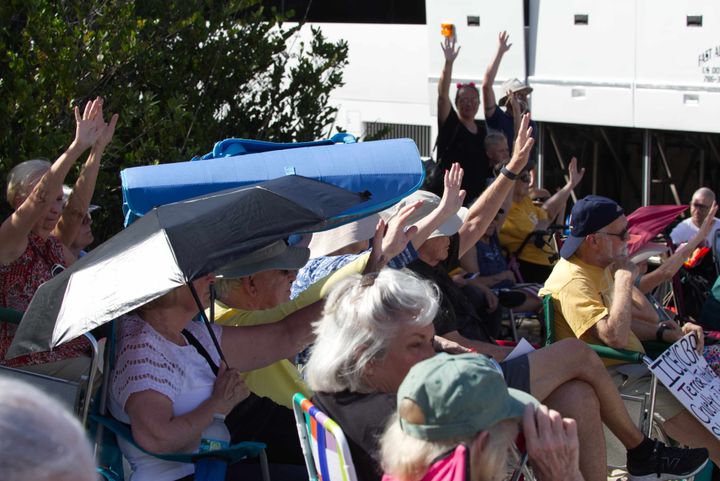
For 30 consecutive weeks, crowds averaging over 100 people have gathered across from the gates to the site along the tourist-loved Tamiami Trail between Miami and Naples, Florida, also known as US 41 and, in Miami, Calle Ocho.
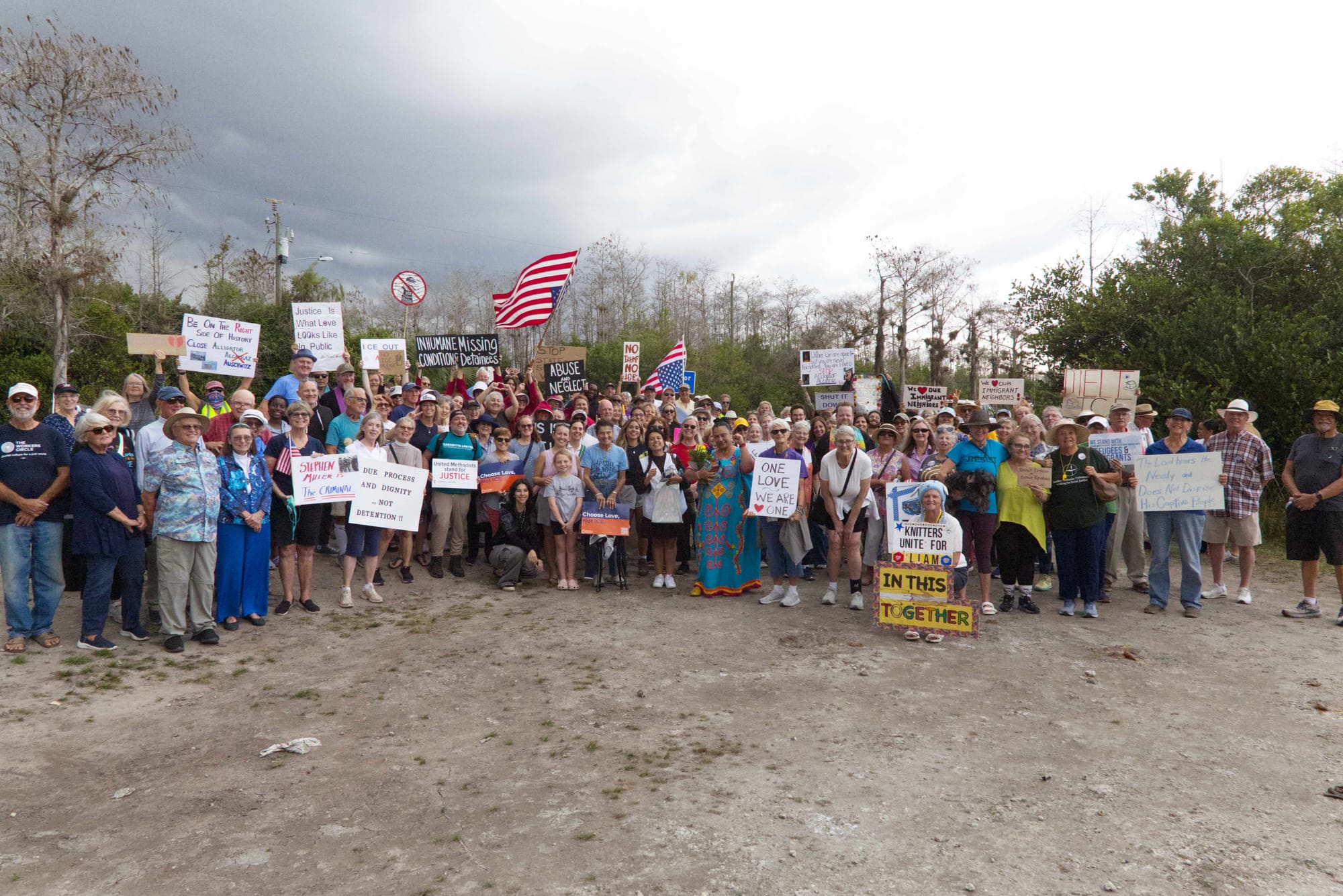
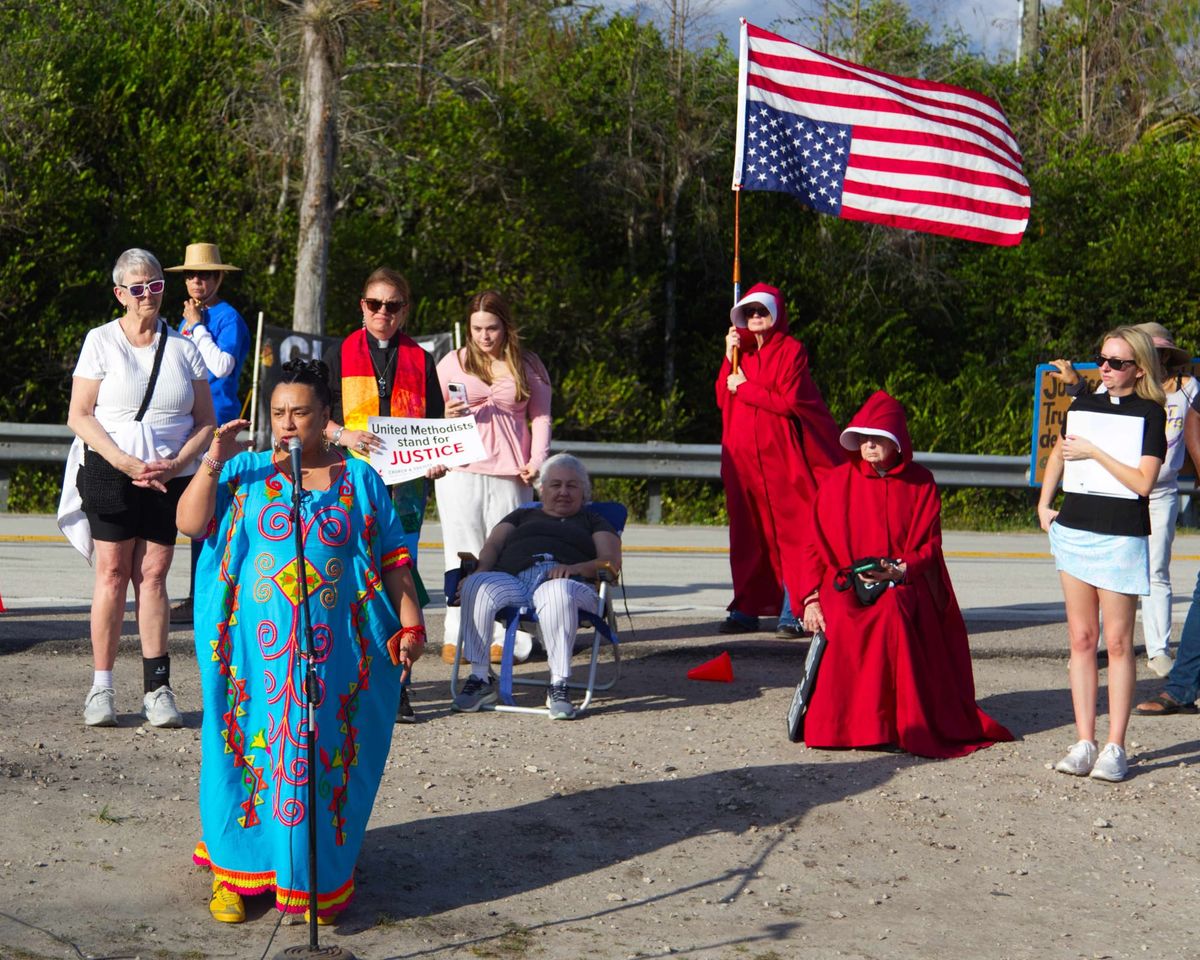
Facilitated by the Southwest District of Florida of the United Methodist Church broadly and hosted by Rev. Kayin Wiley from Cypress Lake United Methodist Church in Ft. Myers, Sunday's vigil attracted around 180 people, including a member of the Colombian House of Representatives and indigenous rights activist Carmen Felisa Ramírez Boscán.
 Sergio R. Bustos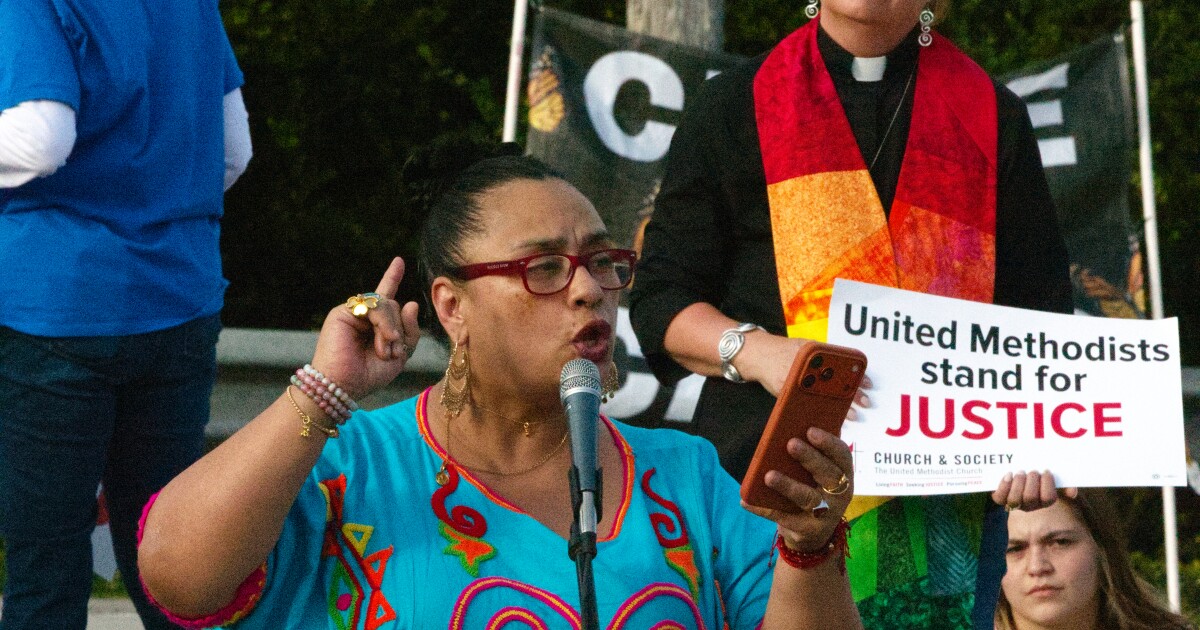
Some of TWIFL's source material was used in this WLRN report, including the feature photo.
Per Wikipedia translated from Spanish: Carmen Felisa Ramírez Boscán, "also known as Karmen, or by her native name Wayúnkerra Epinayú, is an indigenous feminism activist, defender of human rights and the environment, and Colombian politician. She belongs to the Colombia Humana party, being a representative of the Wayú people. She was elected as a representative to the chamber by Colombians abroad in the 2022 legislative elections, being part of the coalition known as the Historical Pact."
Ramírez Boscán opened her remarks by paying respect to the owners of the land, the Miccosukee, "as I myself am indigenous from Colombia so we should pay respect to the custodians of this land."
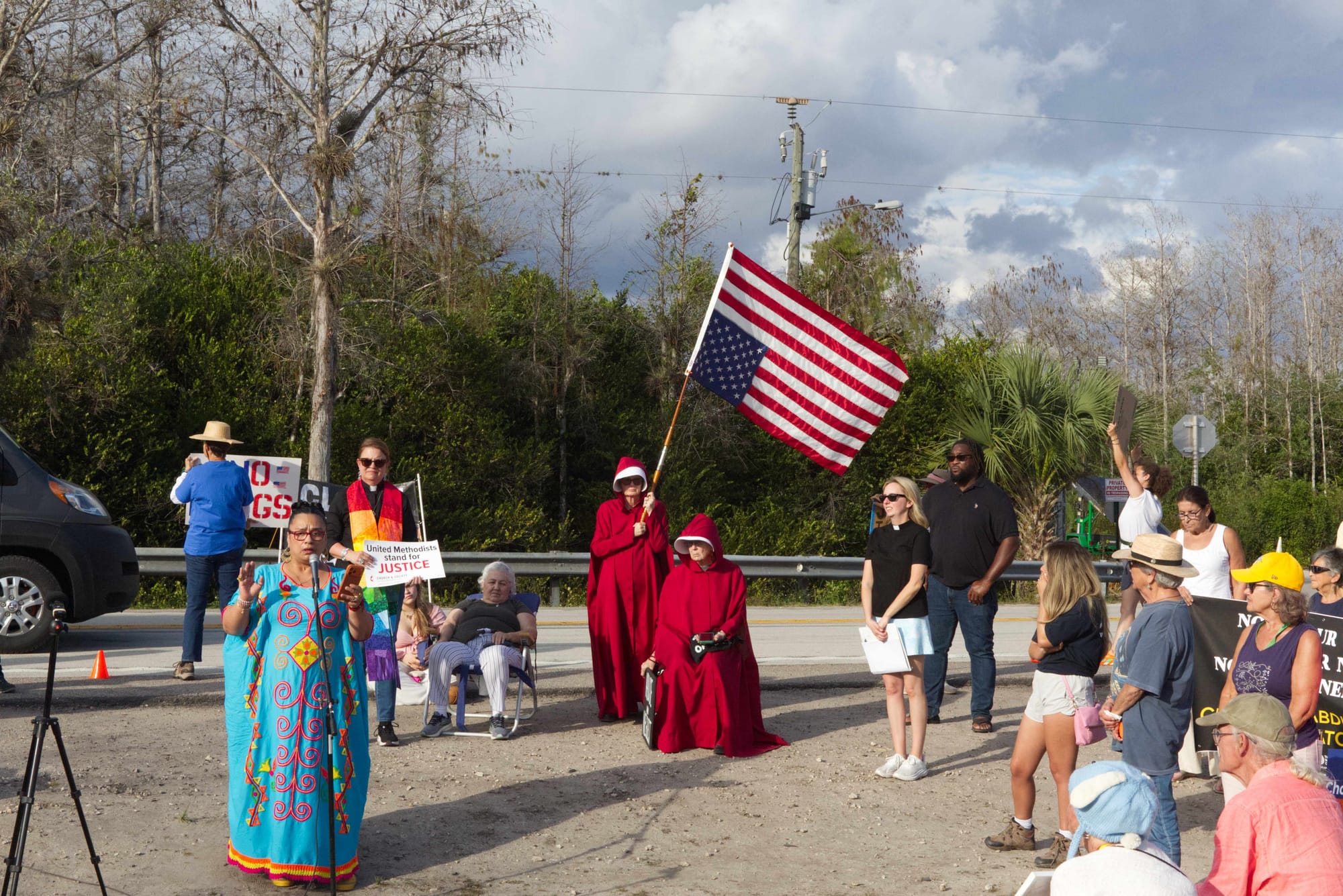
She told the congregation that due to political persecution she had to flee her home of Colombia for 17 years. "I had to run away from my country, my community," and learn multiple new languages just to survive in her temporary home of Switzerland, "and then in Switzerland I also had to learn how the discrimination exclusion and xenophobia against people like us is all over the world."
Pointing at the gates of the so-called Alligator Alcatraz she told the audience, "We definitely do not agree with what is happening with this criminalization of migration, and with this terror against people that," she paused and waved her hands in exasperation, "look different. Apparently look like terrorist. Apparently look like we are going to keep everything from this country.
"But we also contribute with love with culture with hard work to this society."
Noting that detention in and of itself is not necessarily a problem but the way that places like the so-called Alligator Alcatraz are being operated, with "repeated reports of over crowding, limited access to lawyers, poor medical and barriers that make it hard for people to communicate with their attorneys and their families. From a legal perspective this raises serious concerns about due process."
Ramírez Boscán continued, focusing on the environment of terror created in the United States for vulnerable immigrant communities, "Because of what we are witnessing here I have formally asked the Government of Colombia to declare a state of emergency to address what we clearly see as a humanitarian crisis affecting all Colombians living in this country."
The audience erupted in cheers before Ramírez Boscán added, "I ask Latin American countries to all do exactly the same."
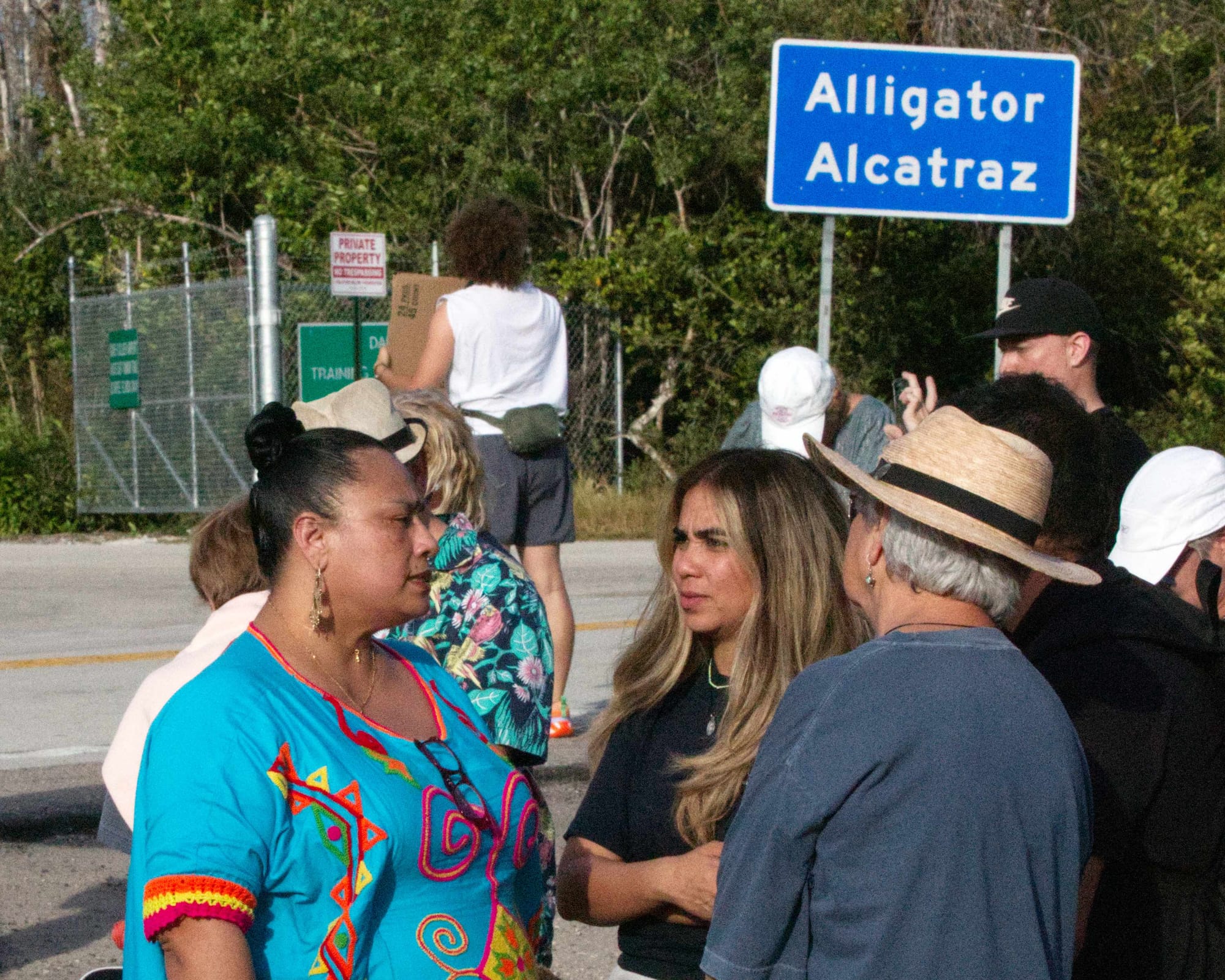
Concluding her remarks Ramírez Boscán told the congregation, "I have a deep deep thanks to you for what you are doing right now...Thanks for standing up and speaking up loudly. Thank you...No cages, no fear, rights come first."
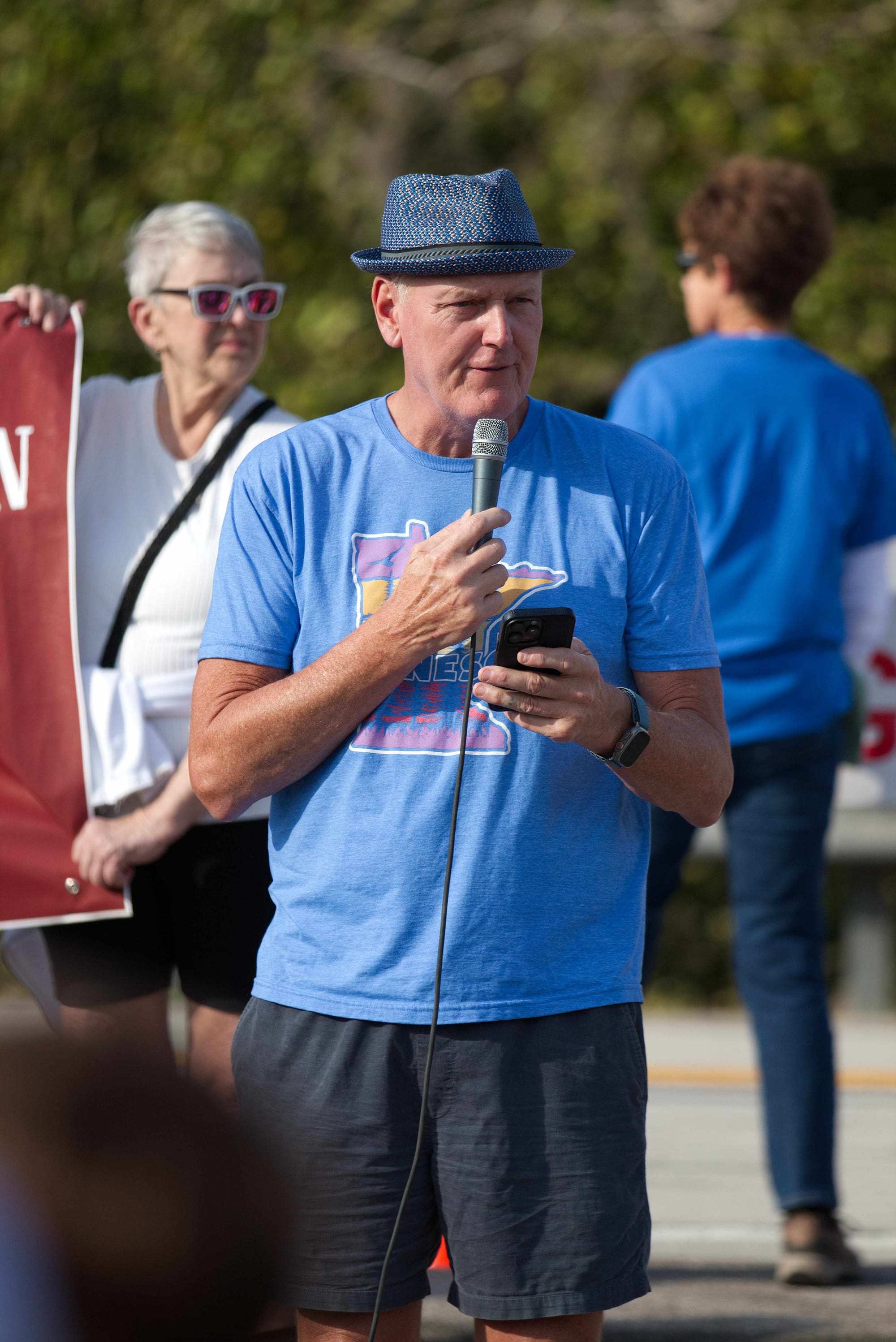
Ramírez Boscán wasn't the only notable attendee for the 30th weekly Sunday prayer vigil. Speakers included pastor, author, activist and founder of Vote Common Good, the Rev. Doug Pagitt of Minneapolis, Minnesota told the gathering how his participation in a prayer vigil across from Alligator Alcatraz in 2025 helped inspire the resistance in Minnesota to Federal immigration activity there this winter.
"Twenty weeks ago I had the privilege of standing here with people outside of Alligator Alcatraz and that has motivated us in Minnesota. So please know we are in this fight with you and together and your courage is translated into our courage....courage is contagious," Pagitt told the congregation along US 41 on Sunday.
"When a system in our country relies on fears and secrecy and dehumanization to function," Pagitt told the congregation in reference to Alligator Alcatraz and the broader Trump Administration immigration polices, "people of good conscience and people of all faith must stand up and say that this is not justice. This is not security and this is not who were are called to be."
Click on the video to see the Rev. Doug Pagitt's full remarks to the congregation gathered for the 30th weekly Sunday prayer vigil across from the so-called Alligator Alcatraz on 22 February 2026.
He went on to criticize the billions of dollars being spent on places like Alligator Alcatraz and similar facilities spending billions of tax payer dollars. "And for what? It accomplishes nothing of lasting value. It will go into the trash heap of shame for our country," he said to cheers from the congregation.
"I'm proud to stand here with you today and let you know that people all over the country cheer you on."
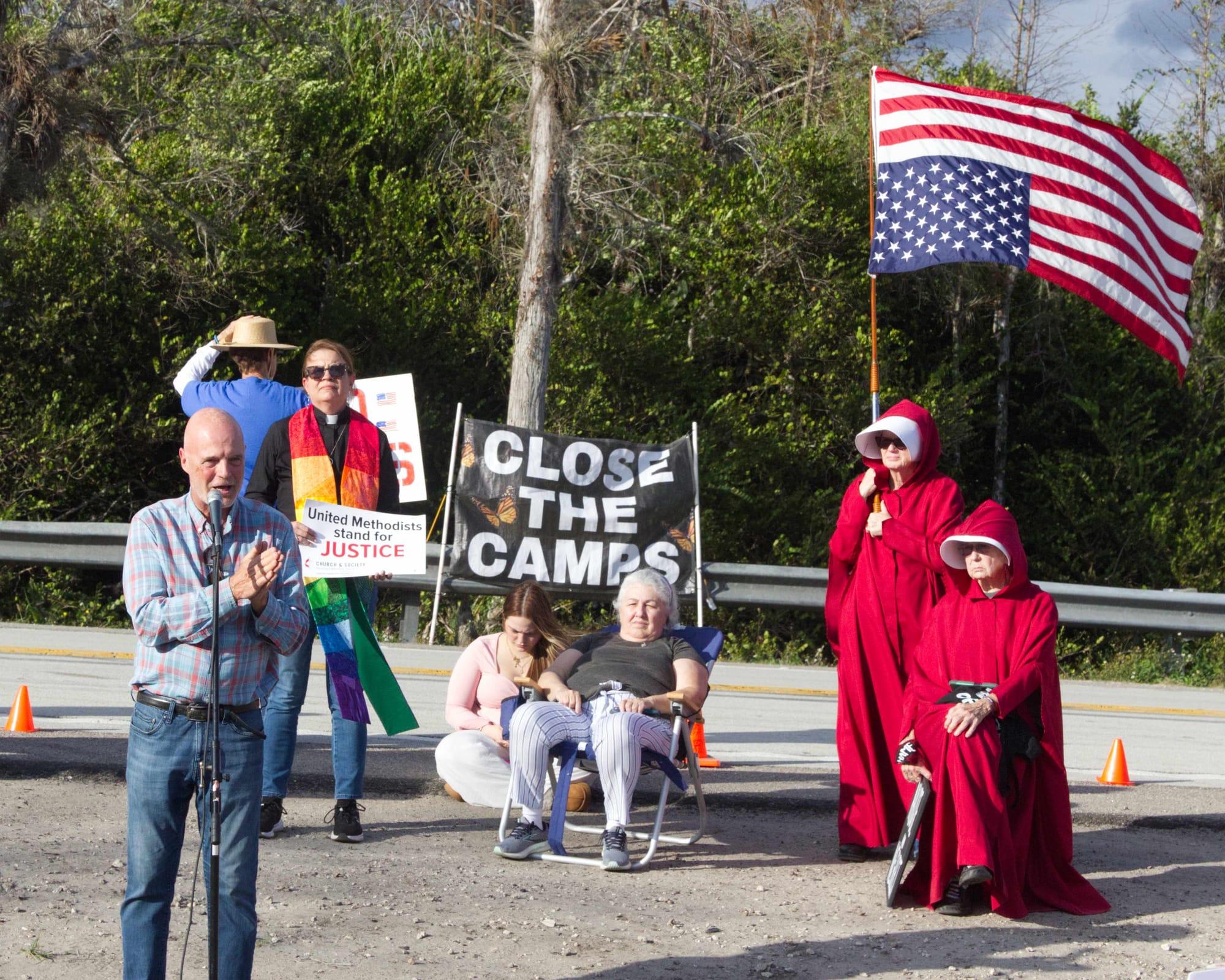
Another nationally recognized theologian, author, speaker, activist, and leading figure in the emerging church movement, Brian McLaren, spoke to the congregation gathered for the 30th weekly Sunday prayer vigil as well.
"I want you to look around this space and appreciate each other," McLaren opened his remarks, commenting that he recognized that some had traveled hours to be there that day.
McLaren encouraged the attendees to not think about religious silos (Methodists in one silo, Lutherans in another, Muslims in another, agnostics in another, etc) and instead think of what he called three horizontal lines of connectivity.
- On his "lower" level is what he calls religion organized for the wealthy and powerful, including the rich and powerful and people who are not rich and powerful but "decided to hitch their wagon to the horse of the wealthy and powerful." Almost every religion has a sector within it that's for the wealthy and powerful, which gives the wealthy and powerful camouflage to exploit others. "Isn't it strange that the wealthy and powerful, the people that own two or three or five or ten homes are upset with people who don't have any homes."
- Religion organized for self-interest is the middle level "is just concerned with keeping its own machinery running."
- The third (or upper) level or "stratum," which McLaren says represents the people at the prayer vigil, is "Religion organizing for the common good...justice and peace."
You can watch McLaren's full remarks here.
McLaren emphasized that he believes in a God who loves people in all stratums of this taxonomy or classification but he thanked the congregation for being the group that is moving together for the good of others. "We dare to believe that all of life can be a story of love," he concluded.
While special guest speaks such as Ramírez Boscán, Pagitt and McLaren, were the highlights of the 30th prayer vigil across from the "horribly named Alligator Alcatraz," the Southwest District of Florida of the United Methodist Church, with a little assist from Rev. Tony Fisher of the Unitarian Universalist Congregation of Greater Naples, made the congregation that filled the space feel at home.
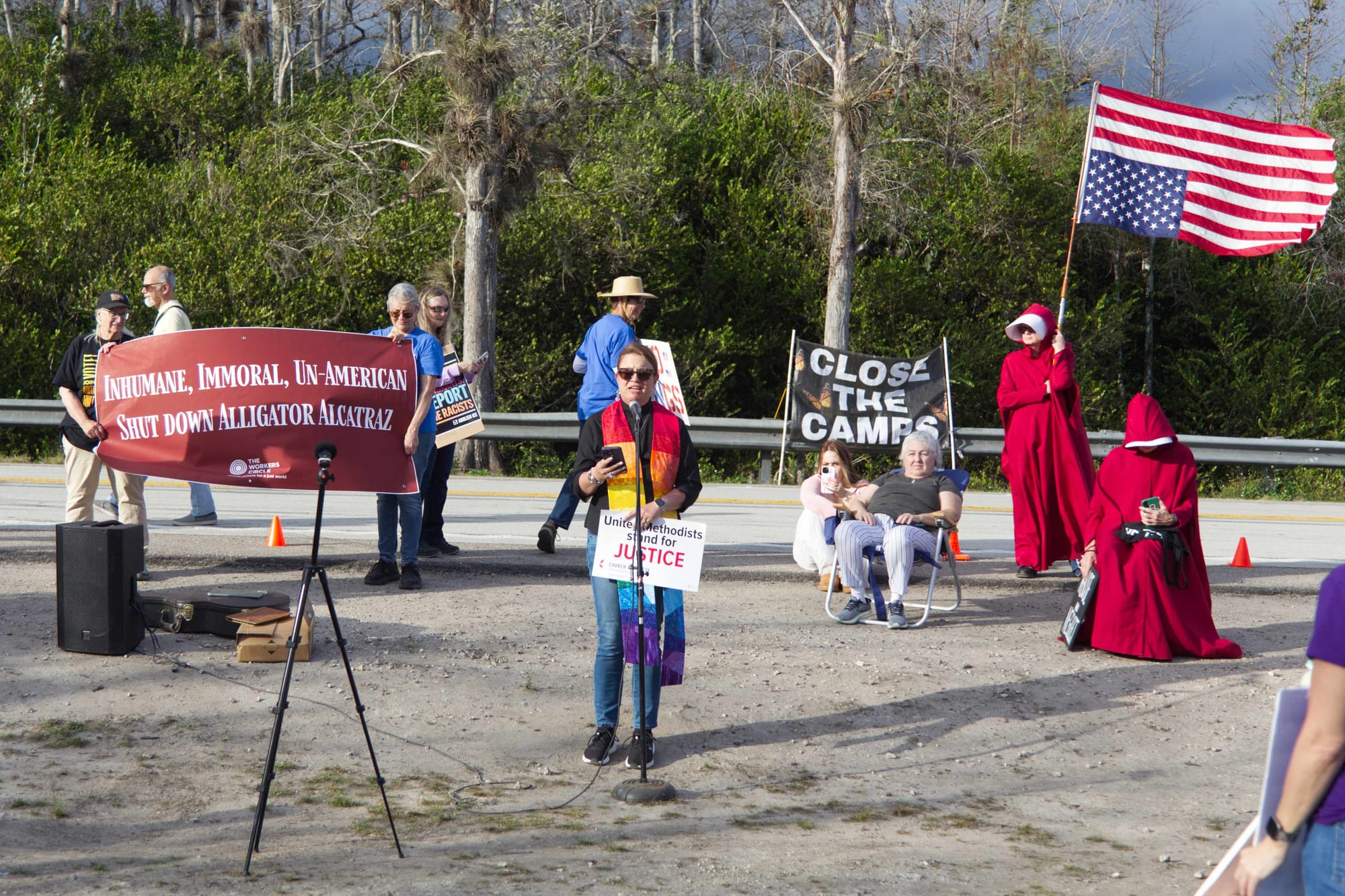
The Rev. Roy Terry of the United Methodist Church in Naples, Florida sang a song that he wrote about freedom to the congregation and the Superintendent of the Southwest District of Florida of the United Methodist Church Rev. Dr. Debbie Allen provided the congregation with final words and blessing.
Before the final blessing, though, Rev. Dr. Allen remembered members of her district who have been detained and or deported such as "Astrid," a young mother who was pulled off the streets of Southwest Florida while on her way to pick up her two young children, 5 and 2, from school and daycare. Astrid never arrived to pick them up, Rev. Dr. Allen told the congregation.
"This place [Alligator Alcatraz] is evil and of injustice and oppression and I thank you for standing up against it....this is not justice or righteousness." She then paraphrased the Rev. Dr. Martin Luther King Jr. and encouraged the people gathered for the 30th weekly Sunday prayer vigil to do the work that bends the moral arc of the universe towards justice.